

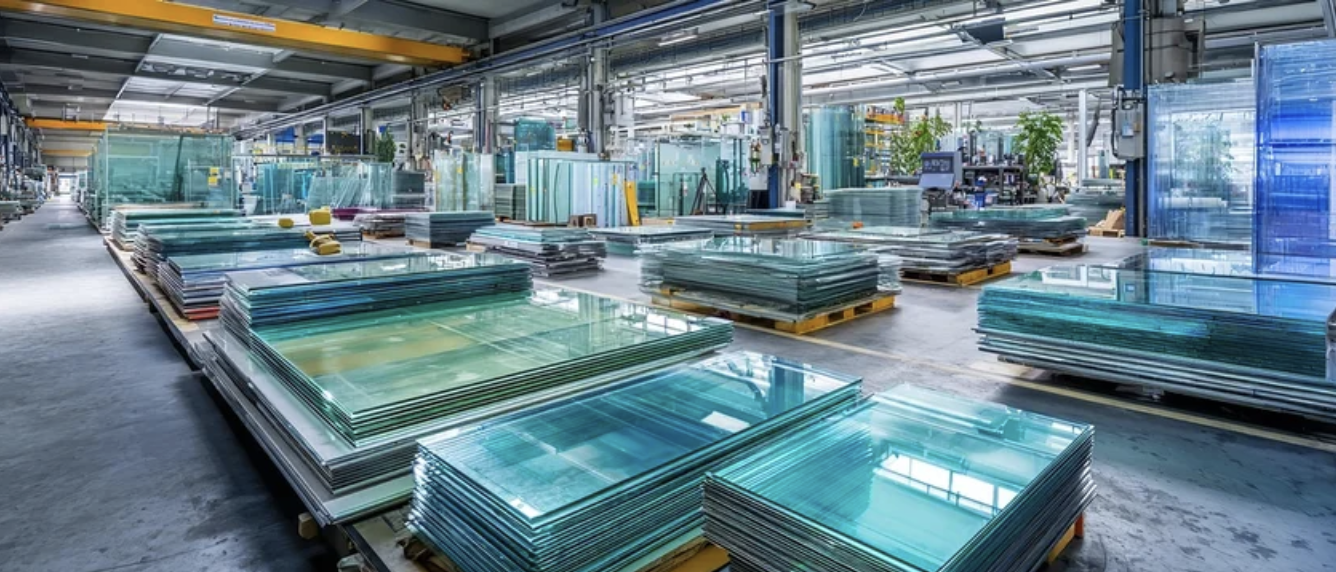
Insulated glass units are demanding products. Single IGU (insulated glass unit) is a multi component assembly. Glass panes are specified by type and thickness, a spacer, gas and a sealant system that must maintain integrity for the declared service life of the product. Every variable matters. Every specification must be documented. And every unit is essentially custom.
Running an IGU production operation efficiently requires software that understands this complexity not a generic system adapted to glass, and not a basic order management tool that happens to have some glass fields added. It requires a platform that was designed around the specific operational model of an insulated glass manufacturer, from how orders are configured and quoted to how production is planned, tracked, and documented.
This article describes what IGU manufacturing software actually needs to do across every stage of the operation, what to look for when evaluating options, and how the right platform changes the day to day management of an IGU business.
The Operational Reality of Running an IGU Production Line
Before discussing software, it is worth grounding the discussion in what an IGU operation actually involves. On any given production day, an IGU manufacturer might be processing orders that include standard double glazed units alongside triple glazed configurations, some with warm edge spacers and some with aluminium, some with argon fill and some with air, some with low E coatings and some without. The same production line must handle all of these configurations in a sequence that makes sense for material grouping and machine utilisation.
Simultaneously, the business is managing incoming enquiries, generating quotes, confirming orders, planning the cutting schedule to minimise glass waste, procuring spacer materials, managing the delivery schedule, and handling quality documentation for CE marking compliance. Each of these functions generates data that is connected to every other function. A change to an order affects the cutting plan, the production schedule, the delivery commitment, and the documentation.
Software that handles only some of these connections or that requires manual re entry at each handoff between functions creates the conditions for errors, delays, and margin loss that characterise IGU businesses still running on spreadsheets and disconnected tools.
Configuration Management: The Foundation of Everything Else
The most fundamental capability required in IGU manufacturing software is the ability to handle glass configurations accurately. This sounds straightforward but is more complex in practice than most generic software can manage.
An IGU configuration is not a product variant it is a combination of independently variable attributes that interact with each other in ways that affect pricing, production, and documentation. The glass type on each pane may differ. The spacer may be aluminium, warm edge, or stainless steel, in various widths. The gas fill may be argon, krypton, or air, at various fill percentages. Coatings may be present on specific surfaces and surface designation (surface one, two, three, or four on a triple unit) matters for both thermal performance and production sequencing. The unit may be standard rectangular or have a complex shaped profile.
What a proper configuration engine does
A proper IGU configuration engine allows the salesperson to specify all of these attributes for each unit in an order and carries those specifications accurately through the entire order lifecycle. When the order is confirmed, the cutting plan knows which glass types to cut for which unit. The production instruction on the shop floor shows the exact spacer and gas specification. The quality documentation records the declared values for CE marking. The despatch label identifies the unit unambiguously.
Without a proper configuration engine, each handoff between these stages is a manual transcription step and each transcription step is an opportunity for error.
Handling mixed configurations in a single order
Many IGU orders include multiple units with different specifications. A glazing contractor ordering for a residential project might need 12 standard double glazed units, 4 triple glazed units for a north facing elevation, and 2 units with opening vent sizes in a different configuration. The software must handle this variety within a single order. Generating separate production instructions for each configuration while maintaining the order as a coherent unit for quoting, scheduling, and delivery.
Quoting IGU Orders: From Minutes to Seconds
Quoting is the first functional test of IGU manufacturing software. The speed and accuracy with which a system generates a price for a complex IGU order reveals more about its suitability for the business than almost any other demonstration.
In a well designed IGU quoting system, the salesperson selects the glass specification for each pane, the spacer type and width, the gas fill, and any coatings or processing requirements. The system calculates the price automatically using current material costs glass, spacer, gas, sealant plus processing costs for cutting, washing, pressing, and sealing, adjusted for the unit dimensions. Customer specific pricing levels are applied automatically. The quote is generated in two to three minutes and is ready to send.
This accuracy depends on having current cost data in the system. When glass prices change, when spacer costs increase, when gas prices shift a single update in the pricing database propagates to every future quote automatically. There is no risk of a salesperson quoting from an outdated price list because the current data is the only data available.
Imperial and metric support for North American markets
IGU manufacturers supplying North American markets must handle imperial measurements widths and heights in inches and fractions, glass thickness in designations like 1/4″ or 3/8″. Software that requires manual conversion between metric and imperial creates daily friction and is a consistent source of dimensional errors. Purpose built IGU manufacturing software handles both measurement systems natively, allowing orders to be entered in the customer’s preferred unit of measure with no conversion required.
Production Planning for IGU: Sequencing That Matches Physical Reality
IGU production scheduling has constraints that are specific to the assembly process and that generic scheduling tools do not understand. The cutting schedule must group glass types to minimise sheet changes. The washing line must process panes in a sequence that prevents cross contamination between coated and uncoated glass. The spacer bending must be completed before the pressing station needs the spacer frames. The pressing and sealing sequence must match the IGU assembly line throughput.
Software that does not understand these physical constraints generates production plans that look correct on paper but cannot be executed without constant manual adjustment. The production manager ends up spending most of each day firefighting the gap between the plan and reality. Which is not planning, it is crisis management.
Effective IGU production scheduling software builds these constraints into the planning logic. It knows that certain glass types cannot be cut on the same table without a cleaning cycle. It knows that the pressing station is the capacity bottleneck and plans the upstream sequence accordingly. It knows that rush orders can only be inserted without disruption if there is specific slack in the schedule and shows the production manager exactly where that slack is.
Connecting cutting plan to assembly line
The cutting plan and the IGU assembly schedule must be synchronised. Panes that are cut for a specific unit must be available at the pressing station at the right time. Not too early, occupying limited floor space, and not late, stalling the assembly line. Integrated IGU manufacturing software manages this synchronisation automatically, generating cutting priorities that feed the assembly sequence rather than optimising cutting in isolation.
Shop Floor Traceability: Every Unit Accountable from Cut to Delivery
IGU traceability is not an optional feature. Under the Construction Products Regulation in Europe, IGU manufacturers are required to declare the performance characteristics of their products and maintain manufacturing records that can be retrieved on request. In North American markets, similar documentation requirements apply under building codes and project specifications.
QR code based traceability implements this requirement operationally. When a pane is cut, it is labelled with a QR code that links it to the order, the cutting plan, the glass batch, and the production date. As the pane moves through washing, coating inspection, and spacer assembly, each scan updates the production record. When the completed IGU unit passes final inspection, the inspector scans the unit and records the inspection result. Including gas fill percentage if measured. Against the unit’s permanent record.
This record is not created by administrative effort. It is a byproduct of normal production scanning. The data is there because the operators scanned the QR code as part of doing their job. Not because someone went back afterwards to fill in a quality register.
Using traceability data for complaint resolution
When a customer reports a seal failure or a quality issue with a delivered unit, the traceability record is what makes a meaningful investigation possible. The unit’s QR code connects to the complete production history: which glass panes were used, which spacer batch, which gas fill measurement, which operator assembled the unit, which quality inspection was passed. This information allows the manufacturer to determine whether the issue is isolated to a specific unit, linked to a specific material batch, or indicative of a process problem affecting multiple units.
Without this data, the investigation is guesswork. With it, the response to the customer is factual, rapid, and professional. Qualities that preserve the relationship even in a difficult situation.
Inventory and Component Management for IGU Production
IGU manufacturing involves more components than flat glass processing, and each component must be managed as part of the production system. Spacer material in various widths, materials, and lengths must be tracked against production consumption. Gas cylinders must be managed against fill usage. Sealant primary and secondary must be available at the assembly line in the right quantities. Primary and secondary seal material shelf life and storage conditions matter for product quality.
Software that manages only glass inventory but not IGU components forces the production manager to maintain parallel tracking systems for materials that are as critical to the product as the glass itself. Integrated IGU manufacturing software tracks all components glass, spacer, gas, and sealant. Against production consumption, generates purchase order requirements automatically when stock falls below reorder thresholds, and links component batches to the units in which they were used.
This last point is critical for traceability: if a spacer batch is later found to have a manufacturing defect, the software can identify every IGU unit in which that spacer was used and flag them for inspection. Capability that is only possible if component consumption has been tracked at the batch level.
CE Marking and Documentation: Compliance as a Byproduct of Production
European IGU manufacturers must CE mark their products under EN 1279, declaring the thermal transmittance (U-value), gas fill percentage, and durability characteristics of each product family. This requires maintaining production records that demonstrate consistent manufacture within the declared parameters.
The documentation burden associated with CE marking is significant when it is managed as a separate administrative task. Integrated IGU manufacturing software reduces this burden by capturing the required data as part of normal order processing and production tracking. The glass specification, spacer type and width, gas fill percentage, production date, and quality inspection result are all recorded against the unit automatically. The CE documentation is generated from this data - it is not a separate document that must be compiled manually.
For IGU manufacturers supplying the UK market post-Brexit, similar requirements apply under UKCA marking. Manufacturers supplying North American markets have analogous documentation requirements under NFRC certification and applicable building codes. Purpose-built IGU software supports these requirements across markets - because they were designed in from the outset, not added as an afterthought.
Evaluating IGU Manufacturing Software: What to Look For
When evaluating software for an IGU production operation, the following questions will reveal whether a system is genuinely suited to insulated glass manufacturing:
- Can it handle a triple-glazed order with mixed spacer types - warm edge on some units and aluminium on others - within a single order?
- Does the cutting plan account for glass type grouping constraints specific to IGU production?
- Does QR code tracking link each finished IGU unit to its glass batch, spacer batch, and gas fill record?
- Does the system support CE marking documentation - or require a separate process to generate compliance records?
- Does it handle both metric and imperial measurements natively for customers in different markets?
- How long does implementation typically take, and what does the support model look like after go-live?
A system that answers all six of these questions satisfactorily - and can demonstrate the answers in a live walkthrough of real IGU scenarios - is built for IGU manufacturing. A system that struggles with any of them will require workarounds that undermine the value of the investment.
Conclusion: IGU Software Is a Production Investment, Not an IT Decision
The decision to implement dedicated IGU manufacturing software is not primarily an IT decision. It is a production decision - a decision about how accurately the business quotes, how efficiently the shop floor runs, how reliably orders are delivered, and how well the business can defend itself when a quality question arises.
IGU manufacturers who have made this investment consistently describe the same outcome: the visible costs of the old system - the errors, the re-work, the compliance stress, the complaints that took days to investigate - decrease dramatically. The invisible costs - the margin lost to manual pricing, the customers lost to slow quoting, the material wasted by suboptimal cutting - decrease too, though they take a few months of measurement to fully quantify.
The right software does not run the business. But it removes the friction that currently prevents the business from running as well as it could.
MonitGlass is a purpose-built ERP and MES platform for IGU manufacturers and glass processors - supporting complex IGU configurations, QR code traceability at the component level, integrated quoting, production scheduling, CE documentation, and delivery management. Used by glass factories across Europe and North America. Schedule a free demo at www.monitglass.com or contact us at contact@monitglass.com

Comments are closed