

Plan and run dispatch from one place - shipments on a calendar, rack management, load building and order-to-load assignment, plus goods-issue documents straight from the system.
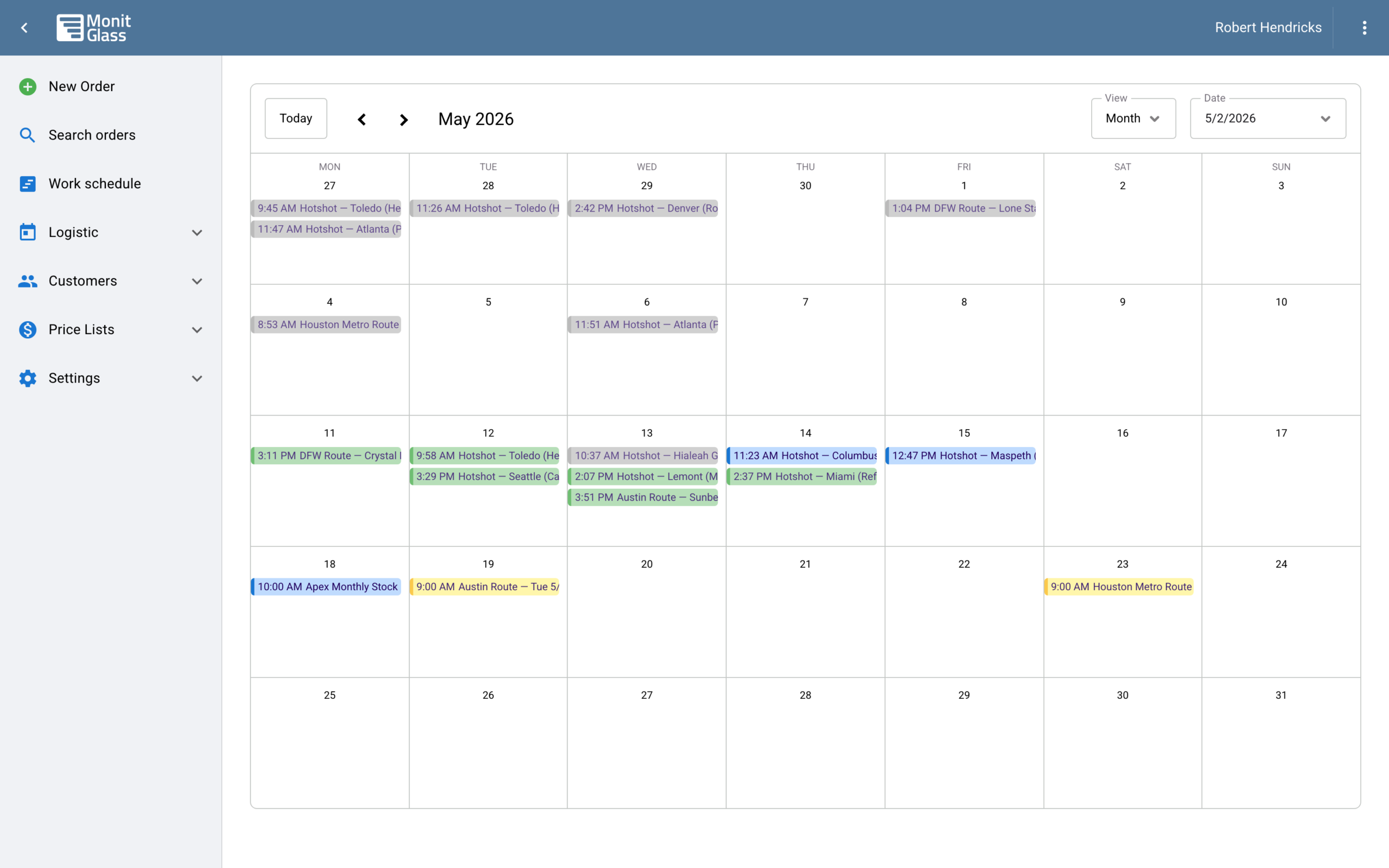

A delivery calendar of shipments, with search and a manageable list of delivery addresses - and each shipment linked back to the orders on it.
Keep delivery addresses once and reuse them across shipments - no re-typing a customer's site address every time.
Search and add racks and see a rack's history - what it carried and when - so you know where your transport racks are.
Build loads and view them from multiple perspectives - by orders in production, by rack and shipment, or by rack search - depending on how you plan dispatch.
Assign finished orders to a load; the system tracks each order's loaded / to-load state so nothing is forgotten on the floor.
Print the goods-issue / dispatch paperwork straight from the load - the document the driver leaves with.
Shipments tie back to the order record, so an order shows what shipment it went out on and when.
Orders that hit "production finished" surface as ready to dispatch, so logistics works from the system, not a list passed across the floor.