

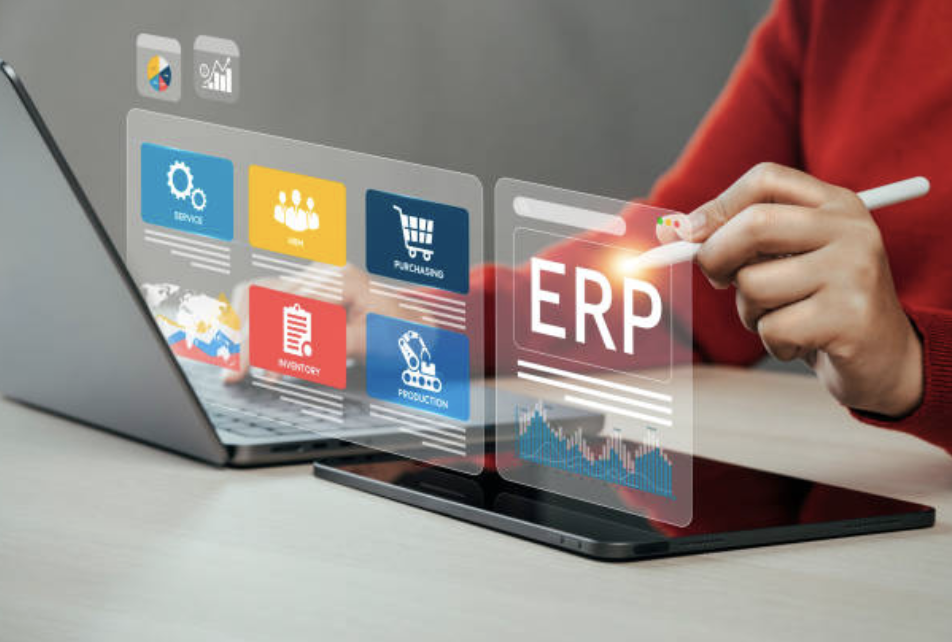
Enterprise Resource Planning software is supposed to make businesses run more efficiently. For many industries, that promise is delivered reasonably well by the major generic ERP platforms - SAP, Microsoft Dynamics, Odoo, and their equivalents. For flat glass manufacturers, the story is considerably more complicated.
Generic ERP platforms are engineered around assumptions about manufacturing that simply do not hold in glass processing. The result is not just inefficiency - it is a system that fights against the way a glass factory actually works rather than supporting it.
This article compares flat glass ERP with generic ERP directly: what each does, where the gaps appear in practice, and how to evaluate whether a system is genuinely suited to glass manufacturing or is a generic platform that has been marketed as one.
What Generic ERP Was Built to Do
Generic ERP systems were designed to integrate the core business functions of a manufacturing company - finance, purchasing, inventory, production, and sales - into a single data environment. They do this well for businesses that produce standardised products in predictable configurations, where the production process is relatively stable and the main management challenge is coordinating volume and cost.
This model fits discrete manufacturing well. An electronics assembly plant, a furniture factory, a packaging operation - these businesses produce finite catalogues of products, manage bills of materials for each SKU, and run production schedules against known routings. Generic ERP was built for exactly this environment.
Flat glass processing is different in almost every dimension that matters for ERP design. Products are custom by default. Every order is defined by a combination of dimensions, glass type, coating, configuration, and processing operations that makes it unique. Bills of materials change with every order. The physical constraints of the production process - sheet sizes, cutting sequences, tempering furnace capacity, lamination batch sizes - create planning challenges that have no equivalent in most discrete manufacturing.
Head-to-Head Comparison: 10 Areas That Matter
The following comparison examines ten functional areas that are critical for flat glass manufacturers. For each, it describes how generic ERP typically handles the requirement versus how purpose-built flat glass ERP addresses it.
| Area | Generic ERP | Flat Glass ERP |
| Order configuration | Handles SKUs and variants. Custom glass configurations require workarounds or extensive customisation. | Native support for IGU, VSG, tempered configurations with all relevant variables - spacer, coating, gas, dimensions. |
| Quoting and pricing | Generic pricing rules. Glass-specific variables (coating, processing, configuration) require manual calculation. | Automated pricing from current material costs, processing rules, and customer-specific price levels. Quotes in minutes. |
| Cutting plan optimisation | No concept of sheet cutting or nesting. Material yield management is not supported. | Automatic nesting of pieces onto sheets with optimisation algorithms. Remnant tracking and reuse built in. |
| Shop floor tracking | Inventory tracking at warehouse level. Individual piece tracking through production stages is not standard. | QR code tracking per piece from cutting table through processing to despatch. Full production history per unit. |
| Production scheduling | Generic capacity planning. Does not account for glass-specific constraints like furnace batch sizes or IGU assembly sequences. | Scheduling built around glass production constraints - tempering batches, IGU assembly lines, lamination sequences. |
| Material waste tracking | Tracks inventory consumed. Does not calculate or report material yield in glass manufacturing terms. | Tracks yield per cutting plan, per glass type, per order. Flags systematic waste patterns. |
| Quality and traceability | Standard lot tracking. Glass-specific quality parameters (gas fill %, spacer dimensions, seal integrity) not included. | Full CE marking documentation support. Traceability from raw material batch to finished unit to delivery. |
| Delivery management | Standard despatch management. Loading optimisation for glass racks and vehicles not included. | Vehicle loading management with glass-specific logic for rack capacity, fragility sequencing, and route planning. |
| Metric / imperial support | Typically single unit of measure. Dual-unit environments require customisation. | Native support for both millimetres and inches in the same system - critical for manufacturers serving both markets. |
| Implementation time | Typically 6–18 months for full deployment. Glass-specific customisation extends timelines significantly. | Typically 2–8 weeks for a glass processor. Pre-configured for glass workflows reduces setup time dramatically. |
The Hidden Cost of Customising Generic ERP for Glass
When a glass manufacturer decides to implement a generic ERP system, the initial cost evaluation typically focuses on licence fees and implementation services. What is rarely accounted for is the cost of customisation - the work required to make a generic system behave like a glass-specific one.
This customisation work is expensive, slow, and fragile. It is expensive because it requires specialist developers who understand both the ERP platform and glass manufacturing - a combination that commands a premium. It is slow because custom development introduces testing and validation cycles that extend implementation timelines from weeks to months. It is fragile because every system update from the ERP vendor risks breaking the custom code, creating an ongoing maintenance burden that never fully goes away.
The businesses that have gone furthest down this path - large glass processors that invested heavily in SAP or Dynamics customisation - frequently describe the result as a system that is better than what they had before but still requires extensive manual workaround in the areas the customisation did not fully address. The cutting plan is still done externally. The shop floor tracking is still partially manual. The quoting is still partly in spreadsheets.
For small and medium glass manufacturers, the customisation approach is not viable at all. The cost and complexity of customising a major ERP platform to handle glass manufacturing properly would exceed the total annual revenue of many processors.
What Purpose-Built Flat Glass ERP Looks Like in Practice
Purpose-built flat glass ERP is not a customised generic system. It is software that was designed from the outset around the operational model of a glass processing business - where the product is custom, the material is measured in square metres, the cutting plan is a core production document, and traceability at the piece level is a quality and compliance requirement.
From enquiry to production in one system
In a purpose-built glass ERP, the journey from customer enquiry to production order is a single continuous workflow. The salesperson enters the glass specification - dimensions, type, coating, configuration - and the system calculates the price automatically using current material costs and customer-specific pricing rules. When the customer confirms, the quote becomes a production order with no re-entry. The specification flows directly to the cutting plan and the shop floor instruction without passing through a human transcription step.
This continuity is not a convenience feature. It is what prevents the specification errors that cause rework, and what ensures that the margin calculated in the quote is the margin earned in production.
Cutting plan as a first-class document
In flat glass manufacturing, the cutting plan is not a byproduct of the order - it is a core production document that determines material cost and production sequence. Purpose-built glass ERP treats it this way. Orders are automatically consolidated into cutting plans that optimise piece placement across sheets, accounting for remnants from previous runs and minimum viable remnant sizes. The plan is linked to the orders it fulfils, so waste is tracked against specific orders rather than disappearing into an aggregate wastage figure.
Quality documentation that satisfies CE marking requirements
European glass manufacturers are required to document the performance characteristics of their products under the Construction Products Regulation (CPR). This includes the glass type, thickness, coating specification, spacer dimensions, gas fill percentage for IGU units, and the test results or declared values that underpin the CE marking. Purpose-built glass ERP captures this information as part of normal order processing, making CE documentation a byproduct of production rather than a separate administrative task.
When Generic ERP Might Still Make Sense
There are circumstances where a generic ERP platform remains the right choice for a glass-related business. A glass distribution company that does minimal processing - buying and reselling stock glass with minimal cutting - may find that a generic system handles its core needs adequately, with glass manufacturing functionality adding cost without proportionate value.
Similarly, a large glass group that is already deeply embedded in a major ERP platform across multiple business units may find that the integration value of maintaining a single platform outweighs the operational limitations for its glass processing operations.
For the majority of glass processors, however - businesses that fabricate custom glass products and need to manage cutting plans, production scheduling, shop floor traceability, and glass-specific quoting as part of daily operations - purpose-built flat glass ERP will outperform any generic alternative, at lower total cost and in a fraction of the implementation time.
How to Evaluate a Flat Glass ERP System
The most important step in evaluating flat glass ERP is to ask vendors to demonstrate real glass manufacturing scenarios, not polished generic workflows. Specifically:
- Ask the vendor to demonstrate a full order cycle for a complex IGU order - from enquiry through quoting, production planning, shop floor tracking, and despatch.
- Ask how cutting plans are generated and how remnants are managed across multiple production runs.
- Ask how the system handles a quality complaint - specifically, how quickly a production manager can trace a delivered unit back to its material batch and production record.
- Ask how long implementation takes and what the onboarding process looks like for a business of your size.
- Ask for references from glass manufacturers of similar size and product type - and speak to them directly.
A system that handles all five of these requirements cleanly is genuinely built for flat glass. A system that needs significant workarounds on any of them is, regardless of what the marketing says, a generic tool that has not been fully adapted to glass manufacturing.
Conclusion: The Right ERP for Glass Is Not the Biggest ERP
The most widely used generic ERP platforms are remarkable pieces of software. They handle extraordinary complexity in the industries they were designed for. But glass manufacturing is not one of those industries, and the mismatch between generic ERP assumptions and glass manufacturing realities is not something that customisation reliably fixes.
For flat glass processors and IGU manufacturers, the right ERP is the one that was built to understand how glass factories work - from the cutting table to the delivery truck - and can demonstrate that understanding in a live demonstration with your actual order types.
MonitGlass is a purpose-built ERP and MES platform for flat glass manufacturers, IGU producers, and glass processors. It handles glass configurations, cutting plan optimisation, shop floor QR tracking, integrated quoting, and CE documentation in a single system - with typical implementation in 2 to 6 weeks. Schedule a free demo at www.monitglass.com or contact us at contact@monitglass.com

Comments are closed